
Shennong – God of Agriculture and the Ancient Legend of Tea’s Discovery
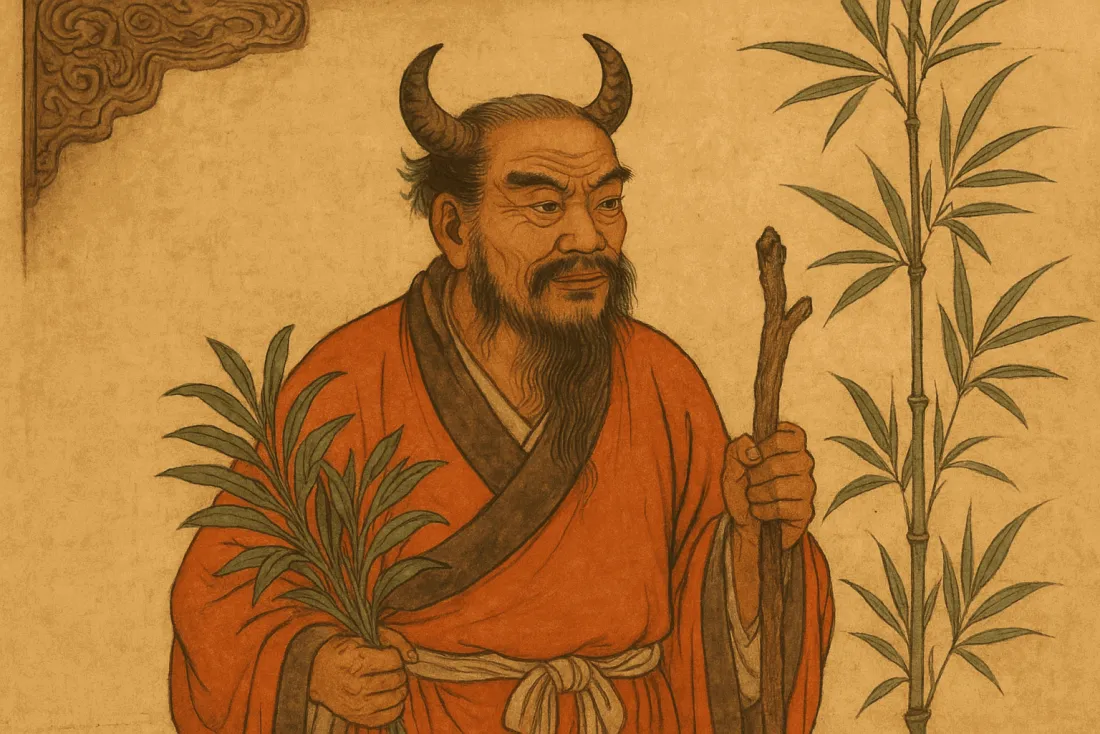
In Chinese mythology, Shennong is one of the most important mythical rulers, known as the God of Agriculture and the father of traditional Chinese medicine. According to legend, the world owes to Shennong the discovery of one of its most beloved drinks – a beverage that later became a symbol of Chinese culture and health. That drink is, of course, tea!
Who Was Shennong?
Shennong (神农, Shénnóng) literally means Divine Farmer. According to myths, he lived around 5,000 years ago and was also called the Flame Emperor (炎帝) and the Emperor of the Five Grains. It is said that shortly after birth, he could already walk and speak. He had the head of an ox – a symbol of strength and wisdom – and a transparent stomach, which allowed him to see the effects of the food and plants he consumed.
Shennong taught the Chinese people how to cultivate grains, vegetables, and medicinal herbs. In Chinese tradition, he is considered one of the Three Sovereigns (三皇, Sānhuáng) – mythical rulers who laid the foundations of Chinese civilization.
According to legend, Shennong tasted different plants every day to discover their medicinal and poisonous properties. In the end, he lost his life during one of these experiments. He consumed the yellow flower of a poisonous weed, which caused his intestines to rupture before he could drink the healing tea he usually used as an antidote.
Shennong and Traditional Chinese Medicine
Shennong was known for testing a large number of plants every day, discovering both their healing and poisonous properties. Thanks to his transparent stomach, he could immediately see how each plant affected the human body. Beyond his contributions to agriculture and herbal medicine, Shennong is credited with inventing the plow, axe, hoe, and irrigation systems, greatly improving the lives of his people. He is also regarded as the initiator of acupuncture and moxibustion, and among the first to understand the importance of pulse diagnosis in healing.
It is believed that he also played a role in defining early forms of the Chinese calendar. By recording seasonal changes and tracking natural cycles, as well as the timing of planting and harvesting, he enabled systematic agricultural planning.
Shennong Bencao Jing – The Oldest Record of Medicinal Plants
His most famous work, the Shennong Bencao Jing (神农本草经), is considered the oldest book on herbal medicine in China. It contains 365 entries on plants, divided into three categories:
- Superior class – plants that prolong life and have no harmful effects.
- Middle class – plants that cure diseases but require careful dosing.
- Lower class – poisonous plants that can be medicinal in small amounts.
The Legend of the Origin of Tea
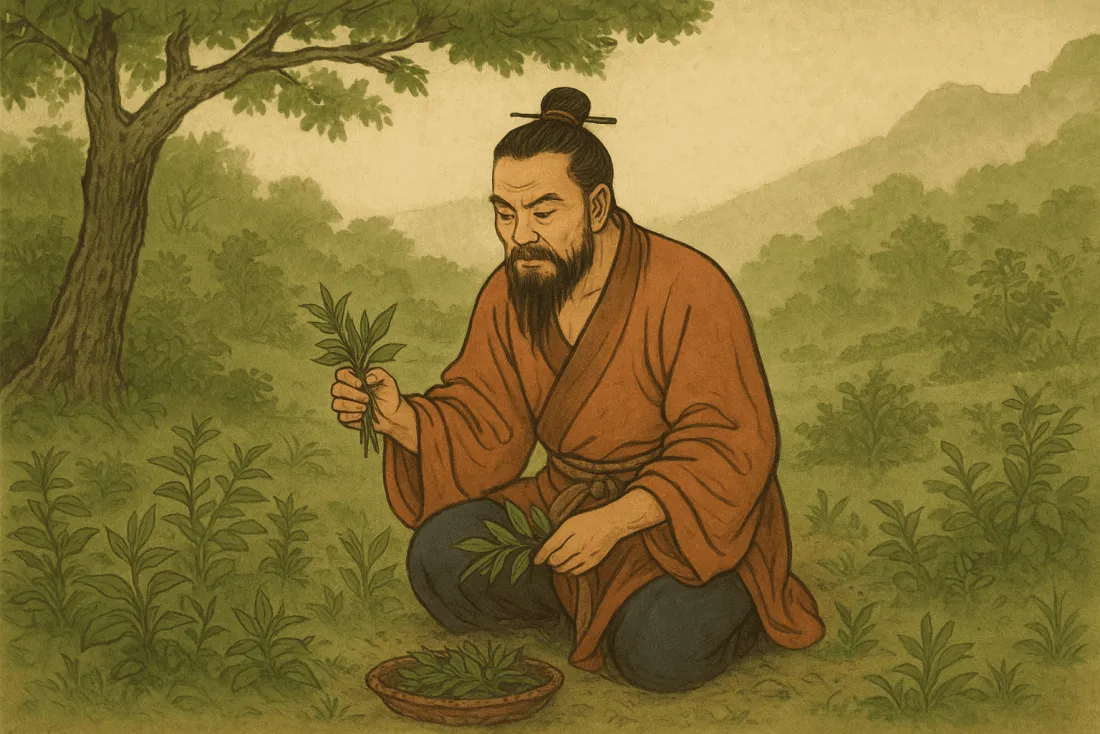
One of the most famous stories about Shennong tells how he discovered tea. While traveling and discovering plants, he decided to rest under a tree and boil some water for drinking. A few leaves from a branch above fell into the pot. Soon, the water turned golden, and a pleasant aroma began to spread. Shennong tasted the drink and immediately felt refreshed and clear-minded. He realized that this plant could help detoxify the body and strengthen overall health. That is how tea became essential part of Chinese tradition.
The significance of this legend lies in the idea that tea is not just an ordinary hot beverage. It is a symbol of health, as it purifies the body. Symbol of harmony, as it brings people together through the tea-drinking ceremony. And finally symbol of wisdom, as it reminds us of the importance of discovery and learning from nature.
Shennong in Chinese Culture Today
Shennong is still honored among farmers, herbalists, and practitioners of traditional medicine throughout China. His image and deeds are celebrated during festivals, in folktales, literature, and art. In some Chinese cities, there are temples dedicated to Shennong, and his contribution to tea is honored through tea ceremonies across the country.
Fun Facts About Shennong
• According to legend, he once tasted 70 poisonous plants in a single day.
• He died after consuming the gelsemium plant – an extremely toxic species that is also used in medicine.
• He is regarded as the patron of Chinese farmers and herbalists.
• He introduced the concept of the “Five Grains” (wǔgǔ) – rice, millet, wheat, barley, and soybeans – which he considered the foundation of both diet and health.
Conclusion
Whether he was a historical figure or a mythical hero, Shennong holds a special place in Chinese culture. His story of discovering tea and studying plants reminds us that nature is a source of health, inspiration, and wisdom.
If you enjoy content like this, follow the blog for more!