
Crouching Tiger, Hidden Dragon: A Hidden World of Symbols, Myth and Unspoken Desire
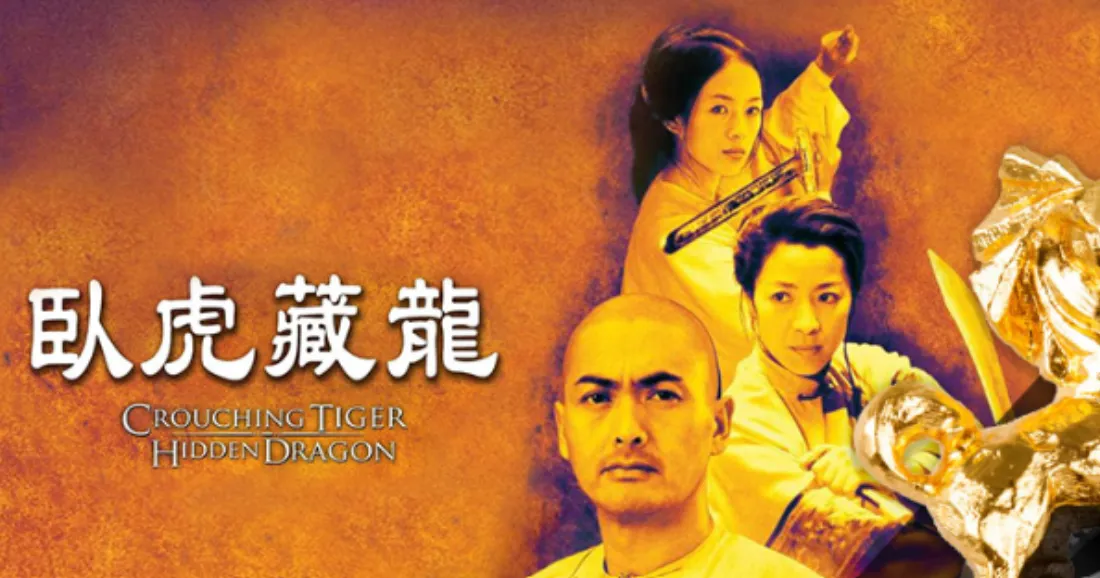
Crouching Tiger, Hidden Dragon is one of the most celebrated Chinese films of all time. Directed by Ang Lee, a filmmaker of Taiwanese origin, it was created as a collaboration between production studios from China, Hong Kong, Taiwan, and the United States. The film left a strong mark on the year 2000, both in the eyes of critics and in cinemas around the world. Its success is reflected in numerous awards, including two Golden Globes, four BAFTAs and four Oscars out of an impressive ten nominations. The plot is based on a novel from the 1930s.
The meaning of the title and the symbolism of the characters’ names
The director’s aim was not to depict China’s real history, but rather an imagined, mythical China. Western and Eastern motifs are woven together to appeal to an international audience — a goal the film undoubtedly achieved. While Western viewers were thrilled, the domestic audience greeted it far more modestly.
The film’s name comes from the well-known chengyu idiom 卧虎藏龙 (Wò hǔ cáng lóng), used to describe a place, person or situation full of hidden talents and potential. The heroine Yu Jiaolong carries the character for “dragon” in her name, while Luo Xiaohu — the young man she loves — has “tiger” in his. Their names subtly suggest that both possess far greater potential than they outwardly reveal.
Main characters and cast
The film stars Zhang Ziyi, Chow Yun-fat, Michelle Yeoh, Chang Chen and Cheng Pei-pei. The central characters include Yu Jiaolong, a young woman from an esteemed family; Li Mubai, a seasoned warrior; Yu Xiulian, a successful businesswoman; Luo Xiaohu, a desert bandit; and Jade Fox, Yu Jiaolong’s governess.
Themes, aesthetics and spiritual elements
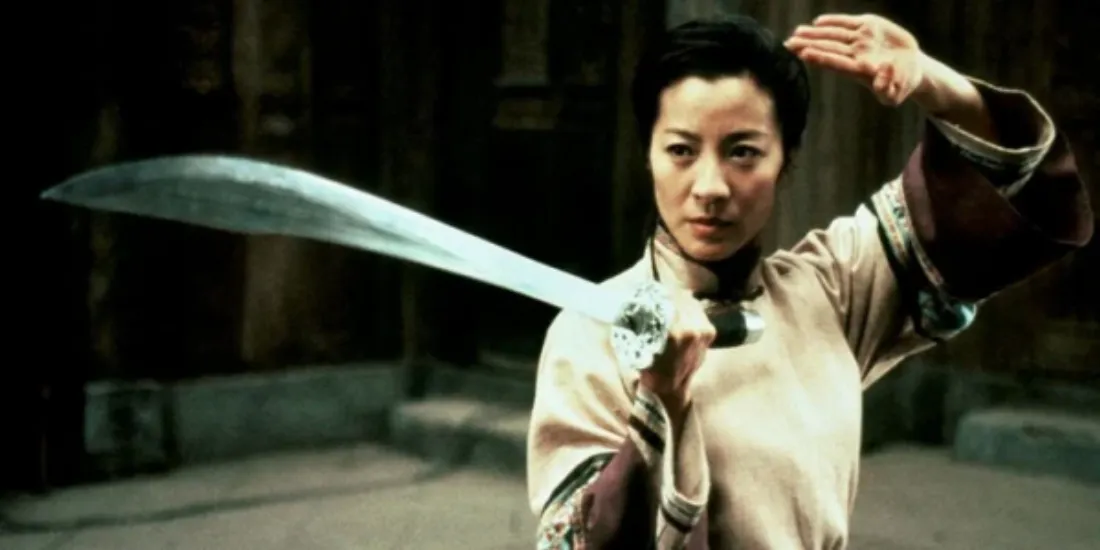
The story takes place during the Qing dynasty (1644–1912), within the patriarchal society of the 18th century. Although it might initially seem like a classic martial-arts film, Crouching Tiger, Hidden Dragon is much more than that. It is a work of breathtaking beauty, poetic elegance and extraordinary power. Chinese mythology, Daoist philosophy, a strong romantic thread and dazzling fight sequences are all interwoven throughout. Key themes include unfulfilled love, resistance to imposed social roles, the longing for freedom, the conflict between tradition and a new social order, and the emancipation of women.
Women as central figures and two impossible love stories
Ang Lee places strong female characters at the heart of the story — women who, each in her own way, fight to pursue her dreams and desires. Among them, Yu Jiaolong stands out most. By day she is a cultured, well-educated young woman from a wealthy family; by night she becomes a skilled martial artist. She has the courage to confront anyone who stands in her way and remains unwaveringly true to herself.
The plot follows two love stories that can never be fulfilled, as the characters are trapped by social norms that dictate whom they may love. One couple, Li Mubai and Yu Xiulian, are renowned warriors who have quietly loved one another for years. They cannot be together out of respect for Xiulian’s late fiancé — Li Mubai’s close friend. They embody traditional values: though they long for freedom, they remain bound by the expectations placed upon them.
In contrast, Yu Jiaolong and Luo Xiaohu’s romance is forbidden because they come from entirely different worlds. She is preparing to enter an arranged marriage to elevate her father’s status. On the other hand, Luo is a bandit who survives by raiding and plundering. Despite this, they share a yearning for wandering, adventure and a life unfettered by social constraints.
Another notable character is Jade Fox who, despite being illiterate, lives as a governess in a respected household. She secretly studies the martial techniques taught on Wudang Mountain — home to the greatest fighters. However, the Wudang master refused to teach women. In revenge, Jade Fox killed him and stole the manual containing the techniques.
The Green Destiny – a symbol of power
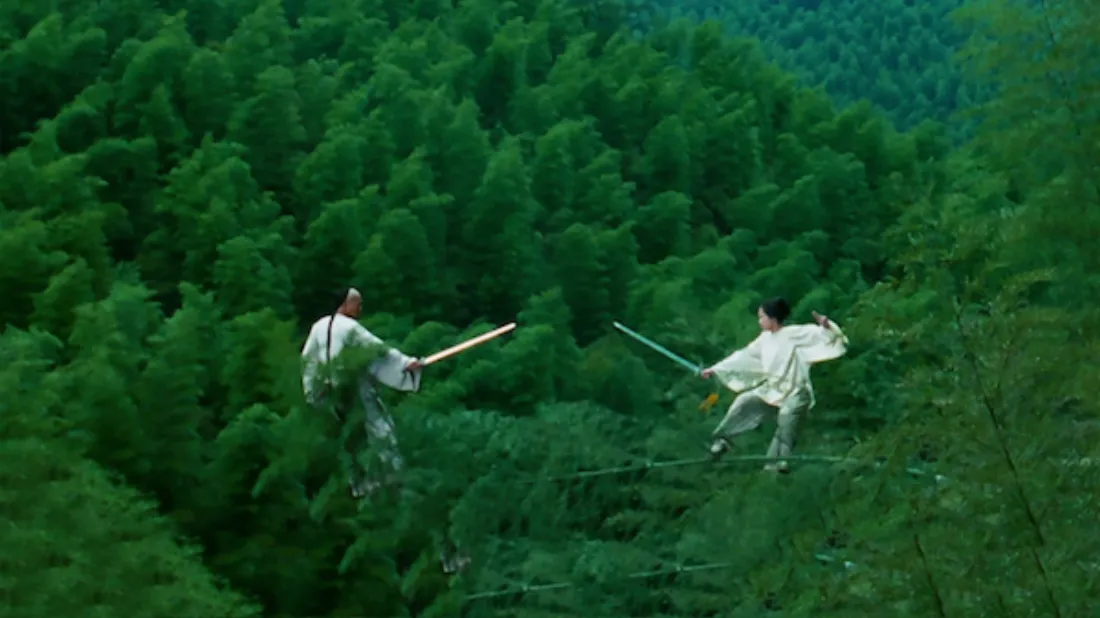
The film is filled with mesmerising fight scenes in which characters display astonishing skill, seemingly defying gravity as they leap across rooftops and glide through the air. Much of this is connected to Li Mubai’s legendary sword, the Green Destiny. The blade has brought its owner countless victories, making it the object of envy, theft and conflict. Over time, the characters realise that the true source of power lies not only in the sword itself but in the person who wields it.
An open ending and its interpretations
The ending of Crouching Tiger, Hidden Dragon is deliberately ambiguous, inviting viewers to interpret it in their own way. Having pushed her physical abilities to the limit, Yu Jiaolong turns toward the spiritual. Following an old legend, she jumps from a mountain bridge — an act that symbolises her right to make own choices. Her leap can be read as a passage into another world, but also as a chance for her deepest wishes to be fulfilled.
Crouching Tiger, Hidden Dragon remains one of the most poetic achievements in Chinese cinema. It blends martial-arts aesthetics, mythology and powerful female characters in a way few films manage to do. Whether you see it as an adventure, a mythic romance or a meditation on freedom, its beauty remains as striking as ever. In 2026 it received a sequel, Crouching Tiger, Hidden Dragon: Sword of Destiny, which is currently available on Netflix. I plan to explore that one in a future post as well.
This text originated as a university assignment for the course Interpreting the Past in Chinese Film. It offers an analysis of the film through the lens of contemporary Chinese cinema.
For more stories about Chinese films, language and culture, follow the blog!