
Chinese New Year (春节, Chūnjié): the meaning, traditions and symbolism behind China’s most important festival
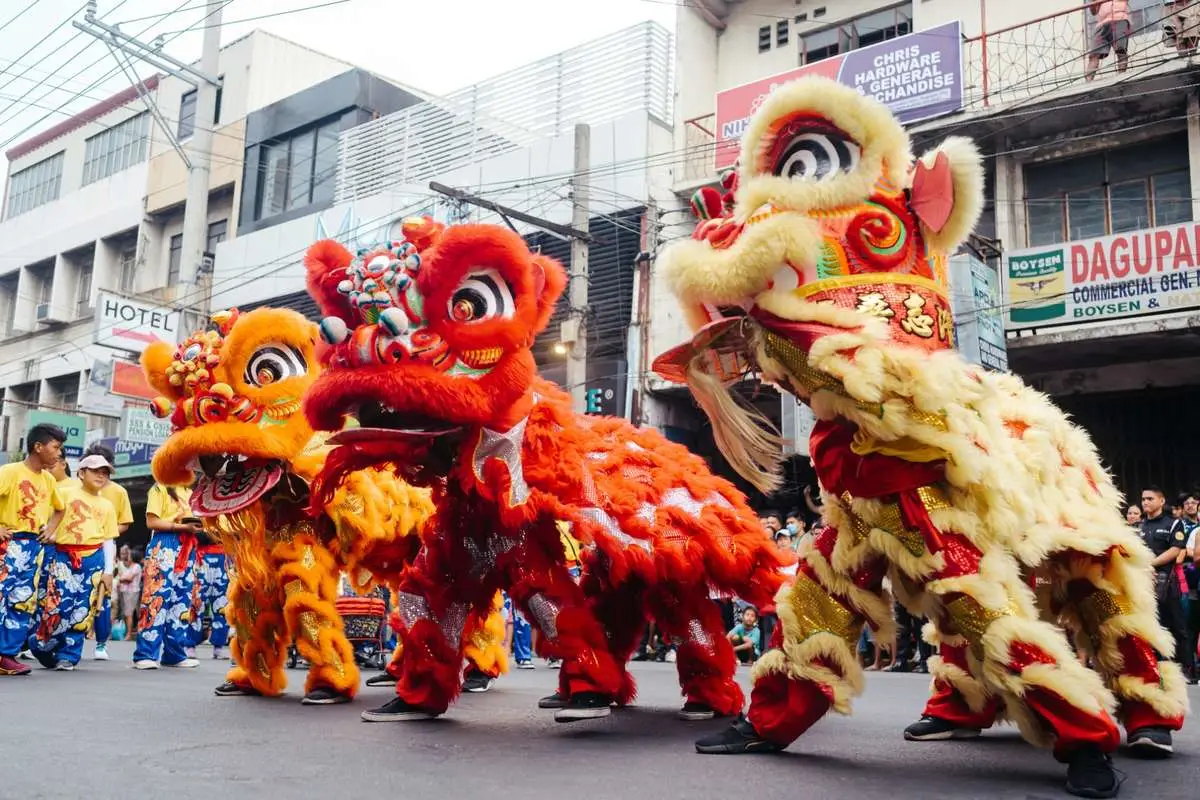
The Chinese New Year, also known as the Spring Festival (春节, Chūnjié), is the most important traditional festival in China. However, it is also celebrated in other parts of Asia and in Chinese communities around the world. Unlike the Western New Year, it is not celebrated on 1 January. The date is determined by the Chinese lunar calendar and falls between 20 January and 20 February. This year, Chinese New Year falls on 17 February, marking the start of the Year of the Horse, a sign that symbolises strength and ambition, as well as significant change.
Each new year also marks the beginning of a cycle under the sign of one of the twelve animals of the Chinese zodiac. The order of these signs originates from the legend of the Great Race.
The Legend of the Nian Monster
According to an old Chinese legend, the New Year originated from a mythical beast named Nian (年, nián). Interestingly, the same character (年, nián) is also used today in Chinese meaning year. According to tradition, surviving Nian meant surviving another year.
Legend has it that Nian appeared every winter on the coldest and darkest night of the year. Depending on the version of the story, it would come down from the mountains or from the sea, attacking villages and destroying crops and livestock, and sometimes even eating people. The villagers lived in fear, fleeing from their homes every year to hide.
According to legend, one year an old man refused to flee. Instead, he stayed in his house and hung red strips of cloth on his door. He also lit torches and bamboo, which made a loud banging noise as they burst. When Nian appeared, it was frightened by the red colour, light, and loud bangs, and fled.
Since then, people have repeated these actions every year, believing that they ward off evil and misfortune. The most important customs associated with Chinese New Year originate from this legend:
- the predominance of the colour red;
- setting off fireworks and firecrackers;
- illuminating homes and streets;
- a loud, joyous celebration.
In a symbolic sense, Nian represents not just a monster, but also the fear, darkness, and uncertainty of the previous year. The loud celebrations, lights and red colour symbolise victory over that fear and the beginning of the new year with hope, energy and protection. In this way, Chinese New Year is not just a change of calendar, but a ritual to drive out the old and welcome the new.
How long does Chinese New Year last?
Although it is often referred to as a single day, the celebration actually lasts for up to 15 days. It begins on the first day of the first lunar month and ends with the Lantern Festival on the 15th day, which symbolically closes the New Year cycle.
Each day of the festival has its own traditions, ranging from family visits and honouring ancestors to special dishes and symbolic customs. The most important day is New Year’s Eve, but the festive spirit lingers long afterwards.
This period in China is also known for mass travel. Millions of people return to their hometowns to spend the holidays with their families. This mass movement of people is considered the world’s largest annual migration and is a powerful expression of the importance of family in Chinese culture.
The official public holidays usually last for about a week, but the festive atmosphere, decorations and gatherings often continue afterwards. In many cities, the true end of the festive period is marked by the Lantern Festival, with its thousands of glowing lanterns in the streets.
How is Chinese New Year celebrated?
Chinese New Year preparations: cleaning and decorating the home
Preparations for Chinese New Year begin with a thorough clean of the home. This is believed to symbolically drive away misfortune and negative energy from the previous year, ensuring that the new year begins with good fortune and opportunities.
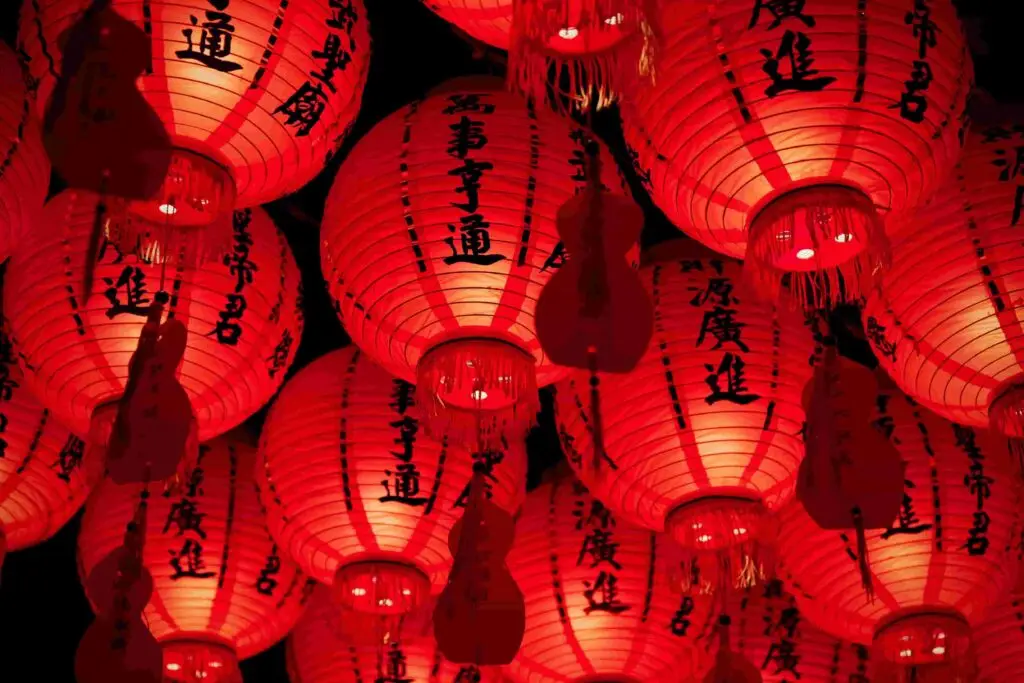
After cleaning, the home is decorated, with red becoming the dominant colour throughout the house. Calligraphic couplets on red paper, known as Chunlian (春联, chūnlián), are hung on the doors. These couplets contain wishes for prosperity, health and success. Paper cut-outs adorn the windows and walls, and red lanterns provide warmth and light.
A special place is held by the character 福 (fú), meaning “luck”. This character is often stuck upside down because the Chinese word for ‘upside down’ (倒, dǎo) sounds the same as the word for ‘to arrive’ (到, dǎo), so this custom symbolises the arrival of luck in the home.
Red was not chosen by chance: it represents joy, vitality, prosperity, and protection from negative forces. During the festival, it is almost impossible to see a home without at least one red decoration.
New Year’s Eve Dinner and Family Reunion
The most important part of Chinese New Year is the family dinner on New Year’s Eve, known as the reunion dinner. Regardless of distance, it is a time when the family gathers around the same table to see out the old year and welcome the new one together. For many Chinese people, this is the only time of year when all the family members are together, so the emotional significance of the meal is as important as the celebration itself.
The table is set with lavish dishes that have symbolic meanings, and the atmosphere is filled with conversation, laughter and anticipation for midnight. Some families stay up late as it is believed to prolong the lives of parents and older relatives. At midnight, fireworks and firecrackers light up the sky, symbolically warding off misfortune and welcoming the new year.
In addition to a family dinner and fireworks, millions of people across China watch a grand television spectacle known as the Spring Festival Gala (春节联欢晚会, Chūnjié Liánhuān Wǎnhuì) on New Year’s Eve. This multi-hour programme, broadcast by the national broadcaster CCTV, is considered one of the most-watched TV broadcasts in the world. It features musical performances, traditional dances, acrobatics, comedy sketches and contemporary productions that blend tradition with modern China.
Thanks to international channels and the internet, the gala can be watched worldwide, most commonly via platforms such as iQIYI, Tencent Video, and the official CCTV YouTube channel, which broadcasts the event live each year. In this way, Chinese New Year becomes a global media event that connects millions of viewers simultaneously.
Traditional food and its meaning
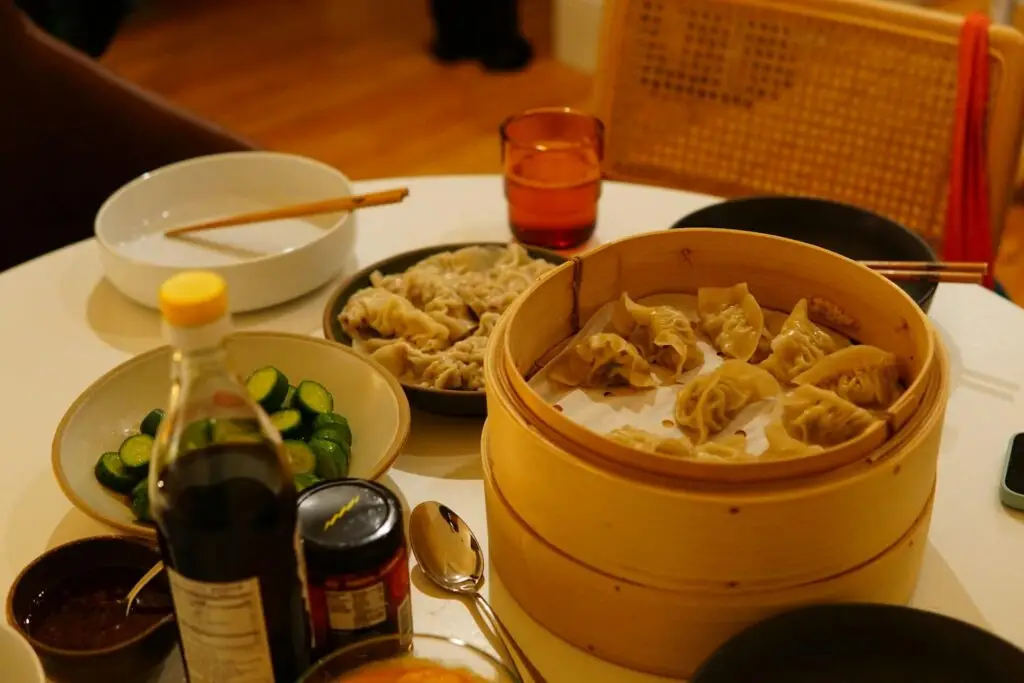
The choice of food for Chinese New Year is never coincidental. Each dish carries a symbolic message and represents a wish for a specific blessing in the new year.
- Jiaozi (饺子, jiǎozi) dumplings resemble old gold ingots and symbolise wealth.
- Fish (鱼, yú) is served because its name sounds the same as the word for ‘surplus’ or ‘plenty’, so it represents prosperity.
- Long noodles (长面, cháng miàn) symbolise longevity and good health.
- Spring rolls (春卷, chūnjuǎn) are associated with progress and new beginnings.
Thus, the New Year’s table becomes a kind of wish list. Through food, hopes for happiness, health, and success in the coming year are expressed.
Hongbao – Red Envelopes with Money
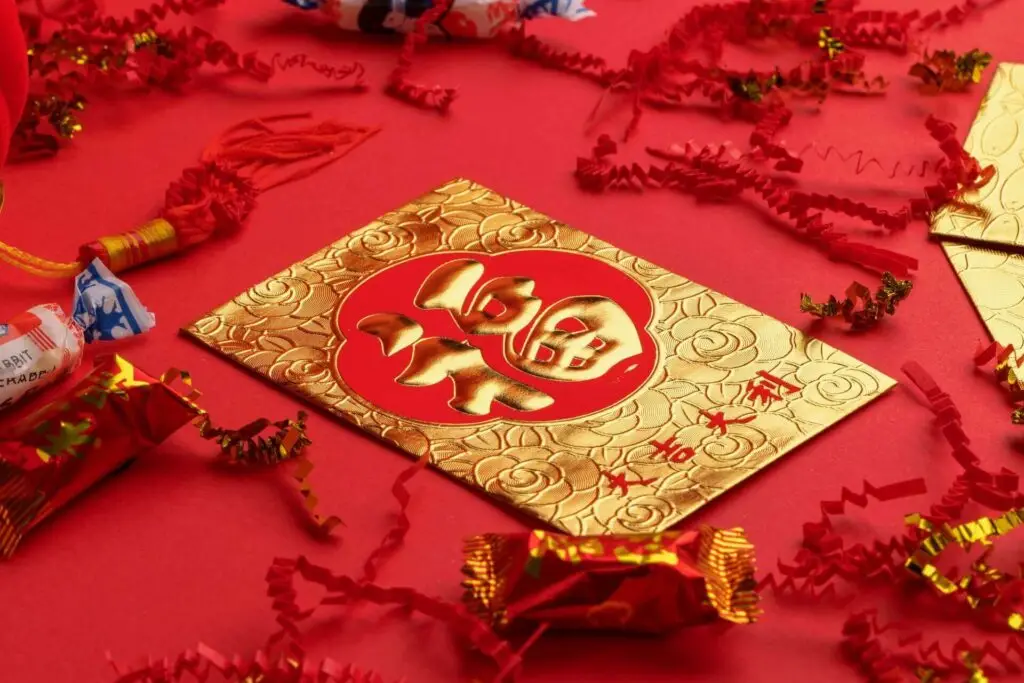
One of the most recognisable Chinese New Year customs is giving hongbao (红包), or red envelopes containing money. These are usually given by older family members to children and younger relatives, but can also be exchanged between friends or colleagues.
The amount of money inside is less important than the symbolism. Hongbao represent blessings, good luck and good wishes for the coming year. The red colour of the envelope plays a key role here too. It protects against misfortune and brings prosperity.
Today, hongbao are often sent digitally via apps, but the symbolism remains the same: sharing good fortune and positive energy at the start of a new cycle.
Visits, fireworks and festive days
After New Year’s Eve, a period of visiting relatives and friends begins. During the first few days, the closest family members receive the most attention, with gifts being given and good wishes being exchanged. In many homes, ancestors are honoured to emphasise the importance of family continuity and respect for tradition.
The cities are then filled with the light of lanterns, street festivals and spectacular dragon and lion dances. Large firework displays, various street festivals, traditional performances and workshops are also organised during the festive days. Everything is coloured red and accompanied by loud noises, as Chinese New Year does not begin quietly but spectacularly.
The festivities culminate in the Lantern Festival, when thousands of lanterns illuminate the streets, symbolically closing the New Year cycle.
Chinese New Year – More Than a Holiday
Chinese New Year marks the start of a new calendar year. It is a time for family gatherings, reconnecting with loved ones and honouring ancestors. It is also a time for making a symbolic new beginning.
Each year is represented by one of the twelve animals of the Chinese zodiac. If you would like to find out which animal marks the current year and its associated symbolism, you can read the article on the Chinese horoscope and the legend of the Great Race.
To read more articles like this, follow the blog!